
A common question before committing to an epoxy garage floor is a simple one: how long will it actually last? The short answer is that a professionally installed system in Ontario should give you 10 to 15 years of solid performance before it needs significant attention. But that number hides a lot of variation. A budget DIY kit might start peeling in two winters. A well-specified multi-coat polyaspartic system can outlast the vehicles parked on it. Here is what actually determines how long your coating holds up.
Typical lifespan ranges by coating type
Not all epoxy products are the same, and the type of system installed is the biggest predictor of how long the floor lasts. In our experience coating garages across the GTA, these ranges hold true under normal residential use:
| Coating type | Typical lifespan | Notes |
|---|---|---|
| DIY water-based epoxy kit | 2 to 5 years | Low solids content, thin film, peels early under heavy use |
| Professional single-coat epoxy | 5 to 10 years | Good for light-use garages, limited UV stability |
| Professional multi-coat system | 10 to 15 years | Primer + base coat + flake broadcast + polyurethane topcoat |
| Polyaspartic topcoat system | 15 to 20+ years | UV-stable, abrasion-resistant, cures faster than standard epoxy |
The difference between a 5-year floor and a 20-year floor is not luck. It comes down to surface preparation, solids content, the number of coats, and what the topcoat is made of.
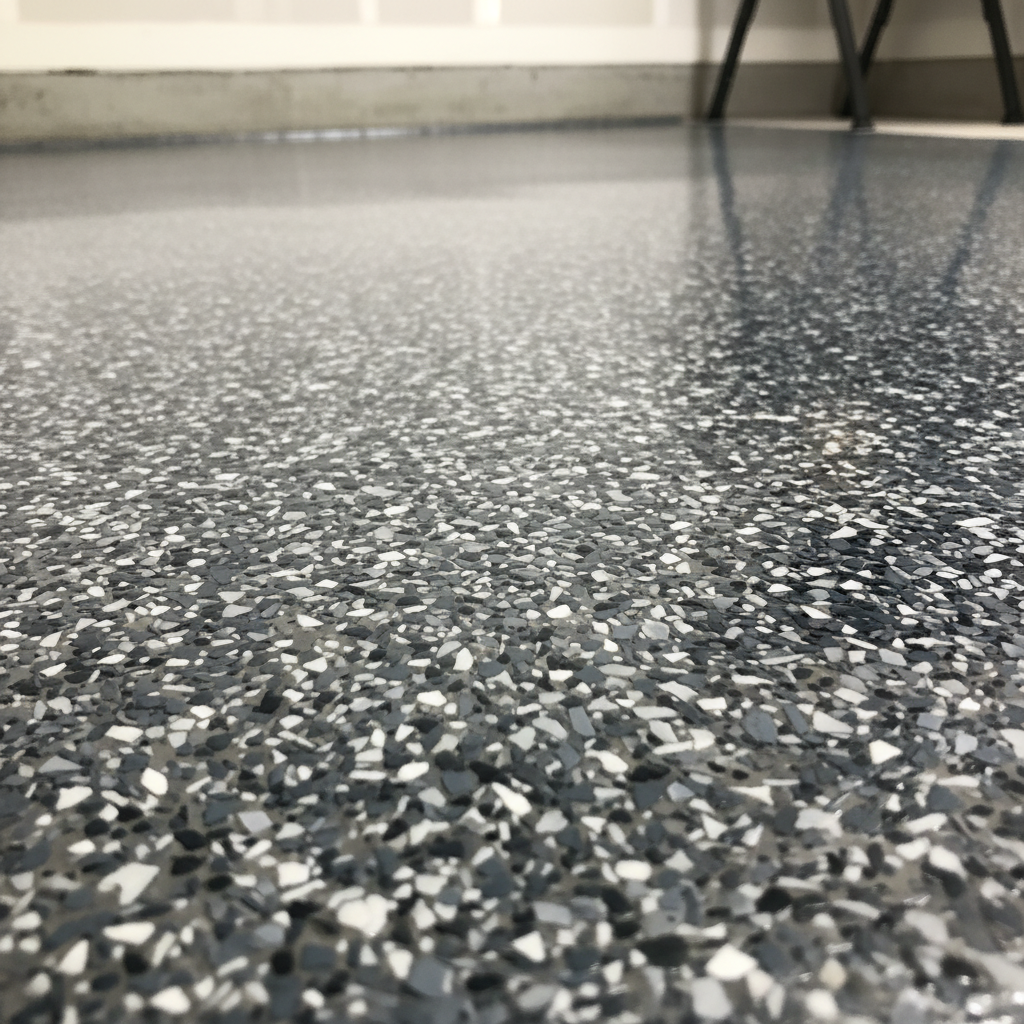
What shortens an epoxy floor’s life in Ontario
Ontario is rough on floor coatings. Any installer who does not account for freeze-thaw cycles, road salt, and hot summer days is going to see callbacks in three years. These are the conditions that separate a 10-year floor from one that fails at year four.
Freeze-thaw cycles
Concrete is porous. In an unheated garage, moisture that wicks up through the slab can freeze and expand underneath the coating, lifting it from below. This is why proper moisture testing before install matters. Floors with a high moisture vapor emission rate need a vapor barrier primer, or the epoxy will tent and peel from the underside regardless of how well the surface was prepped on top.
Road salt and chloride contamination
You drive in from a salted winter road. The coating on the undercarriage melts and drips onto your garage floor. Over time, sodium chloride penetrates the topcoat and begins attacking the epoxy-to-concrete bond. This is one reason polyaspartic topcoats outperform standard polyurethane in Ontario. They are more chemically resistant and less permeable to chloride intrusion.
Hot tire pickup
Parking a car immediately after a long summer drive can damage an epoxy floor that was not specified with enough heat resistance. The thermoplastic nature of some epoxy formulations means a hot tire can literally bond to and then pull away from the surface as the car cools. The fix is using a topcoat rated for this, or adding a transition mat near the entry point where tires are hottest.
Poor surface preparation
If the concrete was not mechanically ground and profiled before coating, the epoxy has nothing to grab onto at the microscopic level. It sits on top like paint and peels accordingly. In experience for the residential concrete polishing work across the GTA, inadequate surface prep accounts for the majority of early failures we see on existing floors. Rental grinders, acid etching alone, or skipping the grind altogether all fall into this category.
Maintenance habits that add years
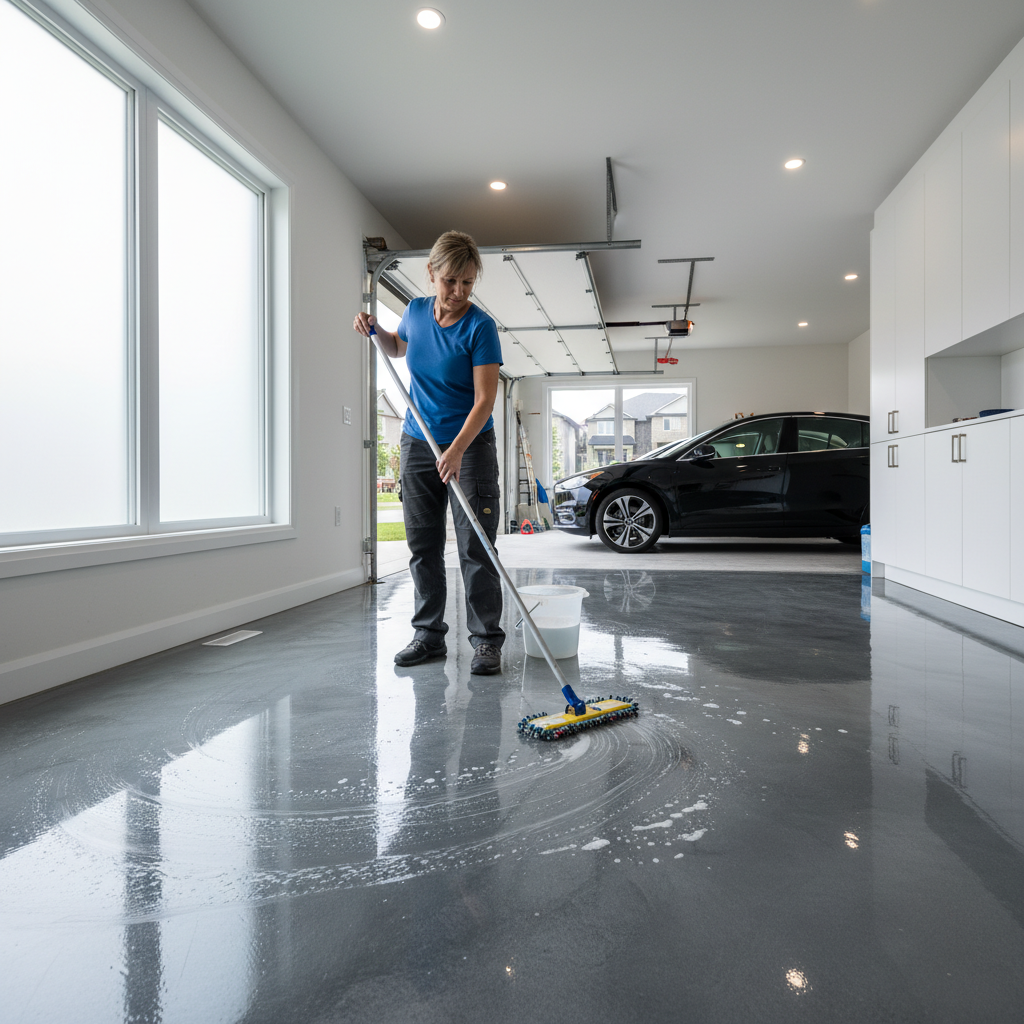
A professionally installed floor that is maintained correctly will consistently hit the high end of its lifespan range. These habits make the difference:
- Clean up chemical spills within 24 hours. Oil, brake fluid, and battery acid are the worst offenders. Left overnight, they work through the topcoat and create staining that will not come out without resurfacing.
- Rinse the floor before salt season. A clean floor going into winter means less chloride contact. Once a month through November to March is enough.
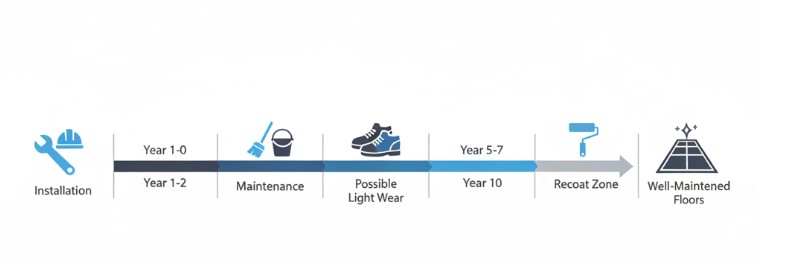
- Reapply topcoat every 3 to 5 years. The decorative base and flake system hold up for 15+ years. It is the topcoat that takes the daily abuse. Refreshing it is far cheaper than full recoating.
- Use a pH-neutral cleaner. Ammonia-based cleaners can dull the finish over time. Warm water with a few drops of dish soap handles most messes.
- Avoid dragging metal across the floor. Tool boxes on wheels with metal casters, jack stands dropped from height. These leave gouges in the topcoat that open paths for moisture.
When to recoat vs start over
This is the decision most homeowners get wrong. They see some peeling and assume the whole floor needs to come out. Often, it does not.
Recoat if: The peeling is isolated to less than 15% of the surface, the concrete underneath is structurally sound, and the failure is in the topcoat rather than the base coat-to-concrete interface. In this case, spot grinding and a fresh topcoat layer extends the floor another 5 to 10 years.
Full removal if: Delamination is widespread, the concrete shows moisture damage or cracking, or the original coating was a DIY water-based product with no mechanical prep. Trying to coat over these conditions just delays the same failure. Diamond grinding back to bare concrete and starting with a proper primer is the only path that gives you a floor with a real lifespan.
For commercial spaces concrete polishing, the calculus is different. Downtime is expensive, so a topcoat refresh on a still-bonded base coat is almost always worth doing rather than waiting for full failure. If you want a straight answer about your specific floor, get a free quote from our team.
Download: Epoxy floor lifespan quick guide
A one-page reference covering lifespan ranges, maintenance checklist, and when to recoat.
Download PDF guideFrequently asked questions
How often should you recoat an epoxy garage floor?
The topcoat layer typically benefits from a fresh application every 3 to 5 years in a residential garage. The base coat and decorative flake system underneath can last 10 to 15 years before it needs attention, assuming the surface prep was done correctly at installation. A topcoat refresh is inexpensive compared to full recoating.
Does epoxy flooring hold up in an unheated garage in Ontario?
Yes, but the product specification matters. A floor in an unheated garage needs a moisture vapor barrier primer and a topcoat rated for low-temperature curing. Polyaspartic topcoats handle freeze-thaw cycles better than standard polyurethane. The floor will not crack in the cold, but moisture vapor pushing through the slab in spring can lift a floor that was not sealed against it at the base.
Why is my epoxy floor peeling after only two years?
Early peeling almost always comes down to one of three things: the concrete was not properly ground and profiled before coating, a water-based product with low solids content was used, or moisture was present in the slab at the time of application. None of these are wear-related. They are installation failures, and a new application over the same surface will produce the same result unless the root cause is fixed first.
How long does epoxy last on a commercial warehouse floor?
Industrial and warehouse floors see much heavier abrasion from forklifts, pallet jacks, and foot traffic. In these settings, a 100% solids epoxy system with a polyurethane or polyaspartic topcoat typically lasts 7 to 12 years before the high-traffic lanes show through-wear. Anti-slip aggregate in the topcoat helps preserve both safety and surface integrity. See our industrial flooring services for more on commercial-grade systems.

Written by
Scott P.
Flooring writer and home improvement researcher
Scott covers a wide range of flooring topics including material comparisons, installation costs, and maintenance schedules. His writing helps homeowners choose and care for the right floor for their lifestyle.