
The common assumption when comparing epoxy vs polished concrete for a showroom is that one of them is simply better, and the only question is which. For a retail or vehicle showroom in the Greater Toronto Area, that framing is misleading. Both finishes can produce a stunning, durable floor; they just optimise for different priorities. The right choice depends on the look you are selling, the traffic the floor will take, and how much downtime your business can absorb during installation. Polished Floors installs both across commercial spaces in the GTA, and the answer almost always comes down to fit, not to a winner.
A showroom floor is not a back-of-house slab. It is part of the brand. Customers read it the moment they walk in, sales staff stand on it all day, and product, whether cars, furniture, or appliances, sits on it under bright light. This comparison weighs the two systems against the things that actually matter in a showroom, so you can brief a contractor with a clear view of the trade-offs.
The two options at a glance
Polished concrete is a finish, not a coating. The existing slab is mechanically ground with progressively finer diamond tooling, chemically densified, and refined to a matte, satin, or high-gloss sheen. There is nothing added on top; the floor you see is the slab itself, hardened and polished. The result reads as understated, architectural, and unmistakably real.
Epoxy is a coating system applied over a prepared slab. It builds a seamless resin layer that can be tinted to almost any colour, broadcast with decorative flake, or finished to a deep, glassy gloss. Where polished concrete works with what the slab already is, epoxy lets you design a surface from scratch, including bold colour and brand-matched effects that polishing cannot reproduce. Our overview of polished concrete compared with epoxy flooring covers the general differences; here the focus is the showroom.
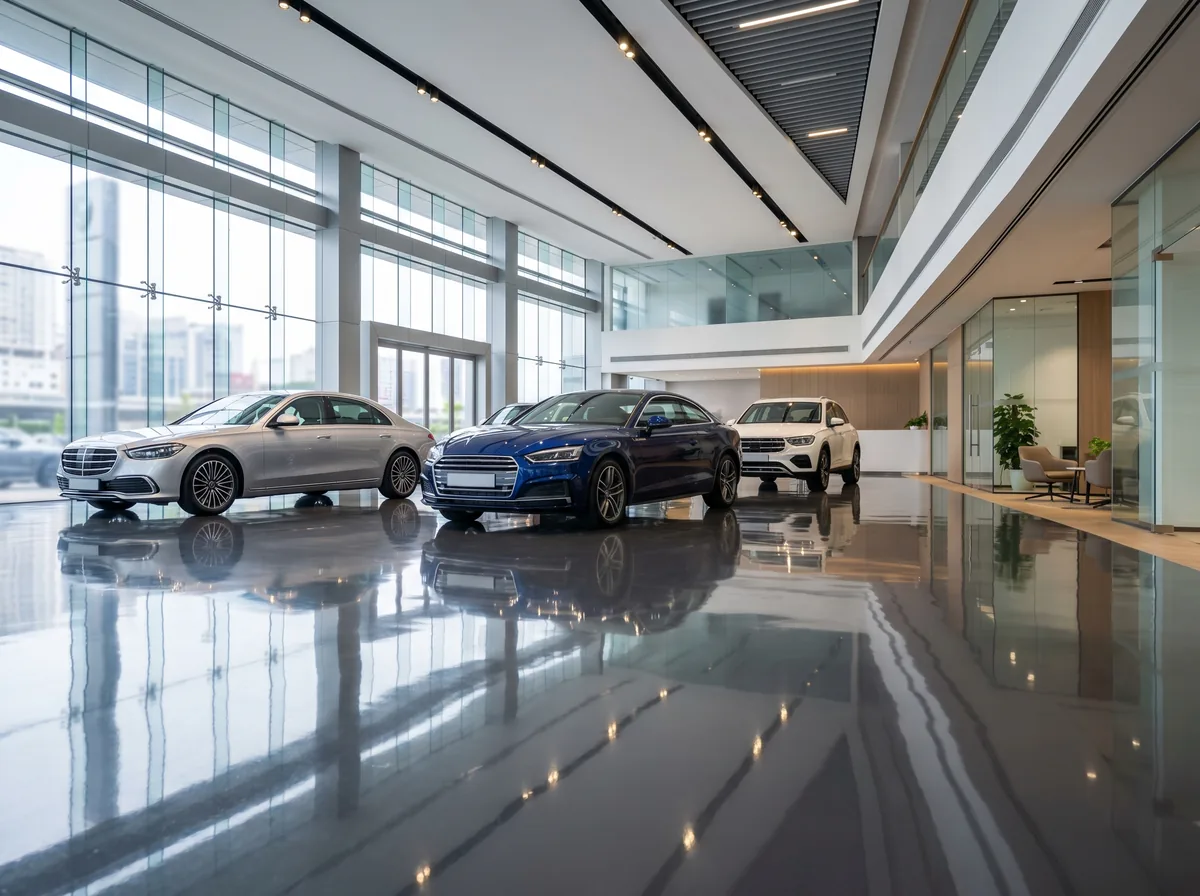
Side by side: the showroom factors that matter
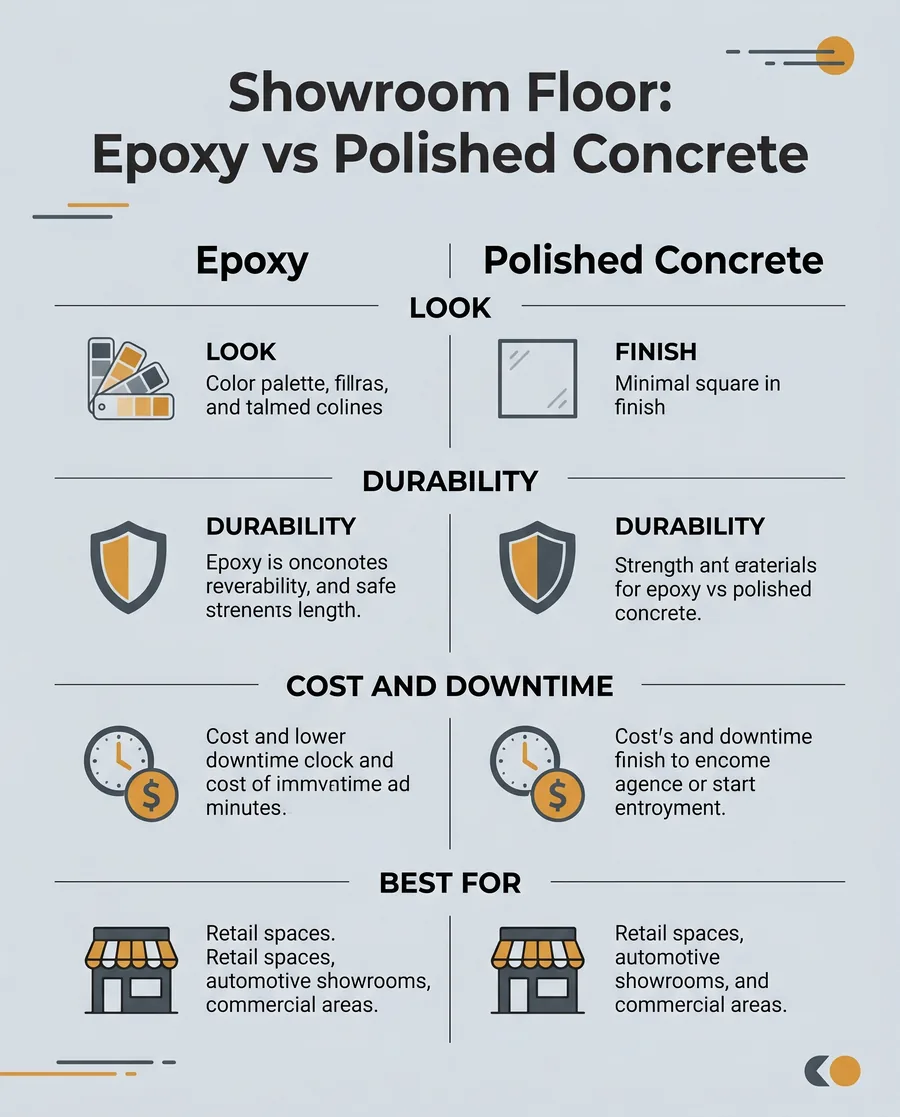
A showroom floor has to do several jobs at once. It has to look the part, survive heavy and sometimes rolling loads, stay safe underfoot, and not pull the business offline for a week to install or maintain. The table below compares the two systems on exactly those points.
| Factor | Polished concrete | Epoxy coating |
|---|---|---|
| Look and branding | Natural, architectural, limited colour; matte to high gloss | Any colour, flake, metallic and high-gloss design freedom |
| Durability under traffic | Excellent; it is the slab itself, very hard wearing | Very good; a tough surface that can chip at heavy point loads |
| Chemical and stain resistance | Good once densified and sealed; can stain if neglected | Excellent; seamless and highly resistant to spills |
| Slip safety | Can be slick when wet unless treated | Anti-slip aggregate can be built into the finish |
| Maintenance | Simple dust-mop and occasional re-polish; long intervals | Easy to clean; may need a recoat every several years |
| Lifespan | Often a decade-plus before major service | Typically several years before refurbishment |
| Install downtime | Longer on site, no strong cure odour | Faster on site, needs cure time before traffic |
Did you know: the slab condition often decides for you
A showroom slab in poor shape, with cracks, patches, or past coatings, can be a poor candidate for polishing because polishing exposes every flaw in the concrete. In that case an epoxy system that resurfaces and hides imperfections may be the only way to a flawless finish. A clean, sound slab, by contrast, gives polished concrete the canvas it needs. An honest slab assessment usually narrows the choice before aesthetics even enter the conversation.
People often ask: which floor looks more high-end in a showroom?
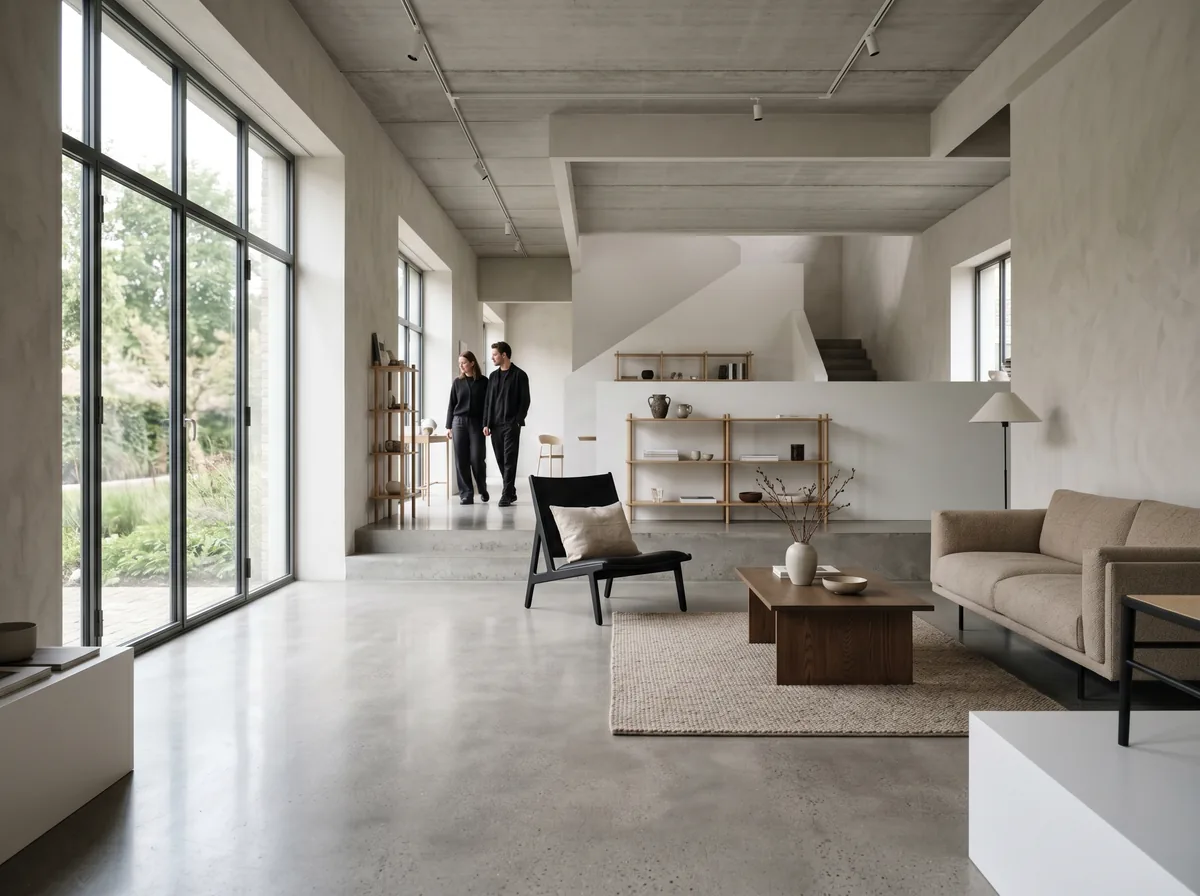
It depends entirely on the brand you are projecting. A high-gloss polished concrete floor reads as minimal, architectural, and premium in the way a modern gallery or an Apple-style retail space does, letting the product be the hero. A metallic or deep-gloss epoxy floor reads as bold, designed, and showroom-glossy, which suits automotive, performance, and lifestyle brands that want the floor to be part of the spectacle. Neither is more high-end in absolute terms; they signal different kinds of premium.
Cost and downtime reality
Pricing note: The figures on this page reflect typical market rates in the Greater Toronto Area as of 2026. What you actually pay depends on the size and condition of the slab, moisture levels, the finish system you choose, and how easy the space is to access. Always get a written quote or on-site assessment before committing to an installation.
For a business, the floor decision is as much about downtime as about square-foot price. Polishing is a multi-stage grinding process that takes time on site but produces no strong odour and no separate cure window. Epoxy is often quicker to lay down, but the resin needs to cure before foot traffic and longer before rolling loads return, which has to be scheduled around trading hours.
| Showroom floor system | Typical GTA installed cost (2026) | Typical time before reopening |
|---|---|---|
| Polished concrete, standard finish | $5 to $9 per sq ft | Several days, no cure odour |
| Polished concrete, decorative (stain or dye) | $8 to $14 per sq ft | Several days to a week |
| Epoxy, solid colour | $5 to $10 per sq ft | 1 to 3 days cure before traffic |
| Epoxy, decorative flake or metallic | $8 to $16 per sq ft | 2 to 4 days cure before traffic |
Plan the install around your trading calendar
The cheapest floor is the one that does not cost you sales while it goes in. For a showroom, the smartest saving is rarely shaving a dollar off the square-foot price; it is scheduling the work for your slowest week and choosing the system whose cure or grind window fits the days you can close. Ask any contractor for a realistic reopening timeline in writing before you compare quotes on price alone.
When epoxy is the better showroom floor
- You need a specific brand colour or bold visual effect. Epoxy can be matched to a brand palette or finished with metallic and flake effects that polishing cannot reproduce.
- The slab is damaged or previously coated. A resurfacing epoxy system can deliver a flawless face over a slab that would never polish well.
- Spills and chemical resistance matter. In a showroom that doubles as a service-adjacent space, the seamless, resistant surface shrugs off oil, cleaners, and dropped product. This is the same reason epoxy performs in high-demand workspaces and why grocery stores favour epoxy floors.
- You want built-in slip resistance. Anti-slip aggregate can be designed into the finish from the start, which is valuable near entrances that get wet in a GTA winter.
When polished concrete wins
- You want a minimal, architectural look. Polished concrete reads as understated and premium, the right backdrop for cars, furniture, or design-led product.
- The slab is sound and you want maximum longevity. Because the finish is the slab itself, there is no coating to peel or recoat, and service intervals are long.
- You cannot tolerate cure odour or want zero off-gassing. Polishing is a dry mechanical process, which suits showrooms attached to offices or open during fit-out.
- Sustainability is part of the pitch. Using the existing slab rather than adding a coating means less material and a longer-lived floor, which can support a building or brand sustainability story.
The finish level is its own decision once you choose polishing. Matte hides marks and reads calm; high gloss maximises light and drama. Our guide to choosing between a matte or high-gloss flooring finish walks through that call, and concrete grinding levels explained shows how aggregate exposure changes the look.
Sources and further reading
- Polished Floors, in-house commercial installation experience and 2026 GTA market cost observations.
- AFT Construction, “Is it Polished or Epoxy… Which is Better?” (video, embedded above).
- Industry guidance on polished concrete and epoxy lifespan and maintenance intervals for commercial floors.
Frequently asked questions
Which is cheaper for a showroom, epoxy or polished concrete?
The two systems overlap heavily on price, so cost alone rarely decides it. A standard polished concrete finish and a solid-colour epoxy both land in a similar per-square-foot range in the GTA, while decorative versions of either, stains and dyes for polishing, metallics and flake for epoxy, push the cost up. The bigger financial question for a business is downtime: epoxy needs cure time before traffic returns, and polishing takes longer on site but has no cure window. Compare total cost including lost trading days, not just the installed price, and get both quotes in writing.
How long will each floor last in a busy showroom?
Both are built for commercial traffic, but they age differently. Polished concrete is the slab itself, so there is no coating to peel; with routine cleaning and the occasional re-polish it commonly performs for a decade or more before any major service. Epoxy is a coating, so it can chip at heavy point loads and typically benefits from a recoat every several years to keep its gloss and protection. In a showroom with rolling loads, ask your contractor about traffic-rated systems and a realistic maintenance schedule for whichever you choose.
Can I put polished concrete or epoxy over my existing showroom slab?
Usually yes, but the slab condition decides which works better. Polishing needs a sound, reasonably flat slab because the process exposes whatever is there, including old patches and cracks. Epoxy is more forgiving and can resurface a tired or previously coated slab to a flawless face. Before committing, have the slab assessed for soundness, flatness, and moisture, since a damp slab can cause an epoxy coating to blister and can affect how a polished floor seals. That assessment often points clearly to one option.
Is one finish safer underfoot for customers?
Both can be made safe, and both can be slippery if specified wrong. A high-gloss polished concrete floor can be slick when wet unless it is treated with an anti-slip conditioner, which matters near entrances during a GTA winter. Epoxy has an advantage here because anti-slip aggregate can be broadcast into the finish from the start, giving consistent grip. Whichever you choose, specify the slip resistance for the wettest, busiest spot in the showroom, usually the entrance, and ask the contractor how they will maintain it over time.
The verdict for a 2026 showroom
The short verdict
There is no universal winner. Choose epoxy when you need brand colour, a flawless face over an imperfect slab, or built-in chemical and slip resistance. Choose polished concrete when you want a minimal, architectural look, the longest service life, and a dry, odour-free install. Match the floor to your brand, your slab, and your schedule, and either one will serve a showroom beautifully.
Download the free quick guide
Take our one-page side-by-side comparison into your next contractor meeting so you can brief the job with confidence.
Planning a showroom floor in the Greater Toronto Area?
Tell us about your space and your brand, and we will assess the slab and recommend whether epoxy or polished concrete fits best, with a realistic cost and reopening timeline. See how we work across commercial flooring and industrial flooring in the GTA, or ask us about a residential project while you are at it.