
The two most common floor systems we install at commercial and residential sites across the GTA are polished concrete and epoxy coating. They look different, perform differently, and suit different spaces. The question is not which one is better. It is which one is right for your situation. Here is a straight comparison to help you decide.
Core differences between the two systems
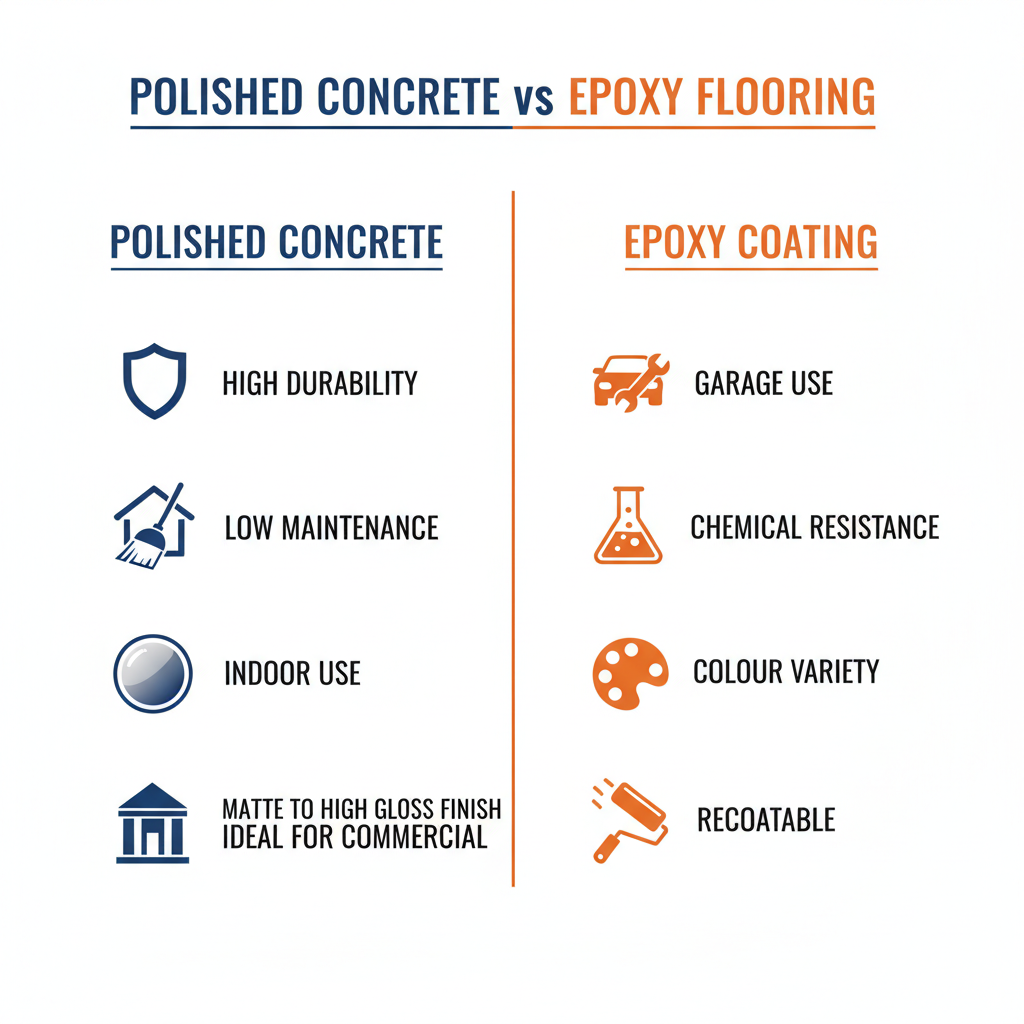
Polished concrete and epoxy are not competing products in the same category. They work completely differently. Polished concrete is a process of grinding the existing slab to expose aggregate, then hardening and polishing it to the desired gloss level. You are finishing the concrete itself, not adding a layer on top. Epoxy is a coating applied over the concrete surface. The slab stays exactly as it is underneath, and the epoxy creates a hard film on top.
That distinction matters for everything that follows: durability, maintenance, how failures look, and what it costs to fix problems down the road.
Where each floor type wins
Polished concrete is the right choice when
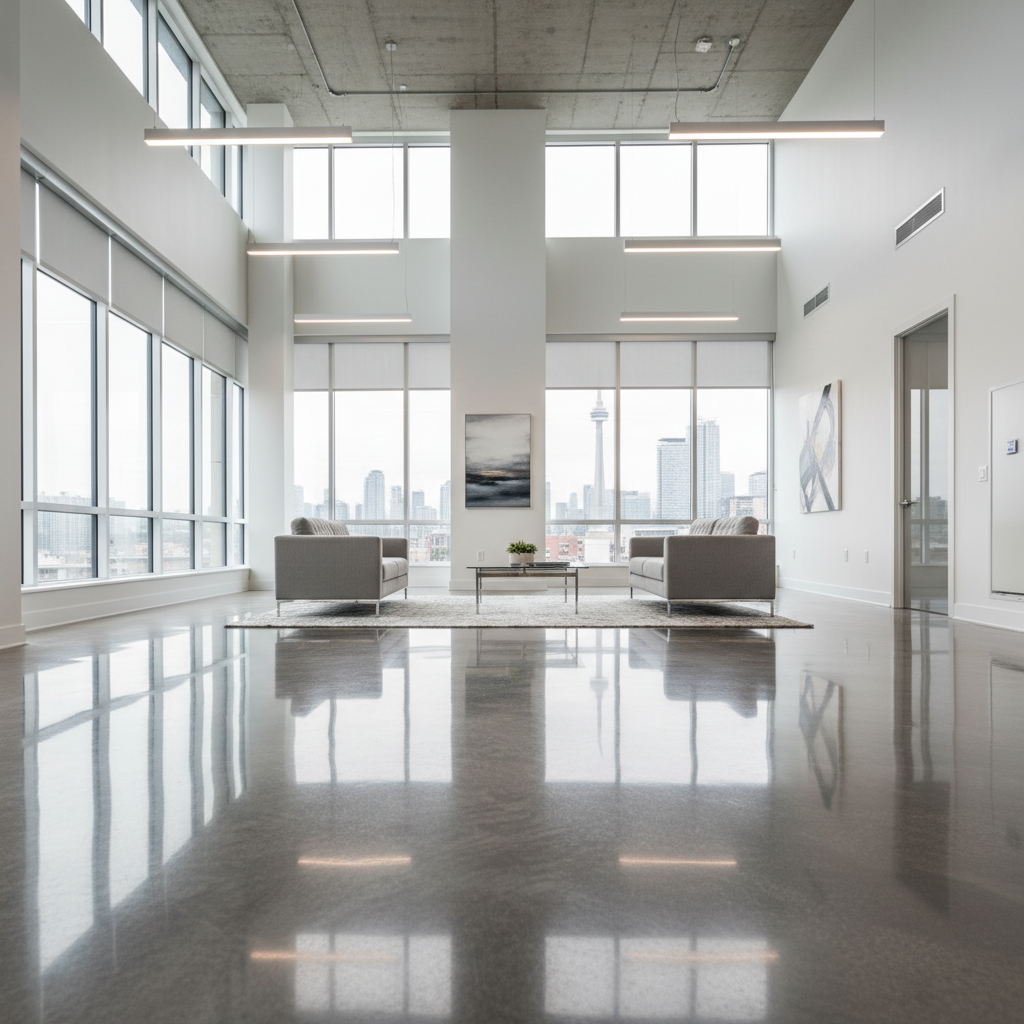
The space sees primarily foot traffic rather than vehicles. Retail stores, offices, restaurants, and loft-style residential spaces are where polished concrete consistently outperforms epoxy. The gloss level is adjustable from a matte industrial look to a near-mirror finish, and the floor does not delaminate because there is no coating to fail. It is also more forgiving under wheeled furniture, office chairs, and trolleys, since scratches affect only the surface layer of the concrete rather than a coating that needs to be intact to protect the slab underneath.
If the concrete slab is in good structural condition and the space has a strong aesthetic vision, polished concrete almost always delivers a more premium result. It is the floor you see in high-end Toronto condo lobbies, boutique retail spaces in Yorkville, and converted warehouse offices in Liberty Village.
Epoxy coating is the right choice when
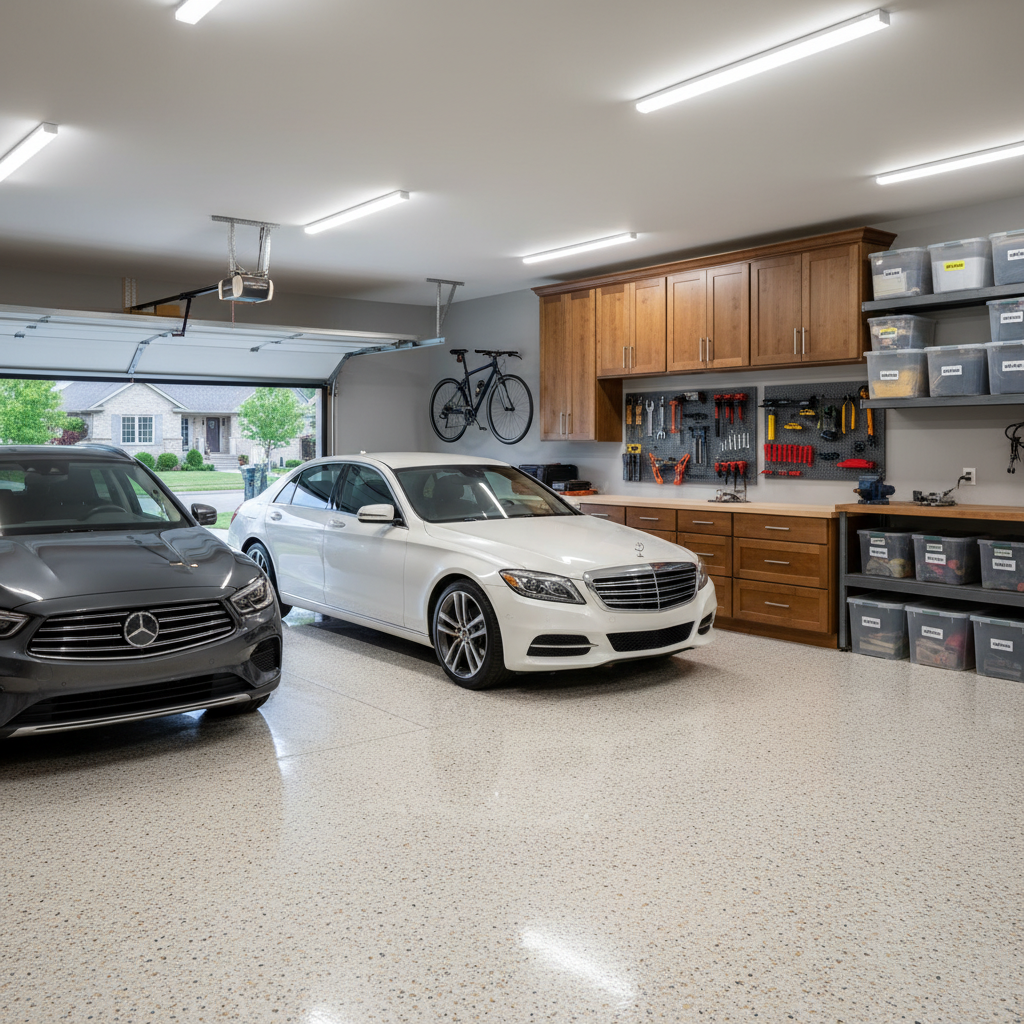
Vehicle traffic, chemical exposure, or decorative customization is the priority. Residential garages, automotive shops, commercial kitchens, and industrial warehouses all benefit from epoxy’s surface protection. The coating creates a barrier between the concrete and whatever gets on the floor, which is exactly what you want when oil, road salt, or chemical solvents are involved.
Epoxy also wins when budget is tighter and quick turnaround matters. A garage can be coated and ready to drive on within 24 to 48 hours of prep. Polishing a concrete slab to a high gloss can take 2 to 4 days depending on the existing condition of the concrete and the desired finish level. For epoxy garage floors specifically, the flake and colour customization options let homeowners match the floor to their garage aesthetic in ways that polished concrete cannot.
Cost comparison in Ontario
Both systems vary significantly based on the condition of the concrete, the desired finish, and the size of the space. These are broad ranges based on typical Ontario projects:
| Factor | Polished concrete | Epoxy coating |
|---|---|---|
| Installed cost | $4 to $12 per sq ft | $3 to $10 per sq ft |
| Lifespan (with care) | 20+ years | 10 to 20 years |
| Maintenance cost | Annual resealing, low | Topcoat refresh every 3 to 5 years |
| Repair cost if damaged | Spot polish or reseal – moderate | Topcoat spot repair – low to moderate |
| Full replacement cost | Full regrind and repolish | Full strip and recoat |
Polished concrete costs more up front but often has a lower total cost over a 20-year window because the maintenance is simpler. Epoxy’s lower initial cost makes it accessible for residential projects where budget is a constraint, but ongoing topcoat maintenance is a real cost to factor in over time. For a residential concrete polishing in the GTA, getting accurate quotes for both options is worth doing before committing.
Maintenance and long-term care
Maintaining polished concrete
The main requirement is keeping the densifier and sealer layers intact. An annual application of a penetrating concrete sealer in high-traffic areas prevents the surface from slowly opening up and collecting grit. Day-to-day, a dust mop and a damp mop with a neutral-pH cleaner is all it takes. Avoid vinegar or citrus-based cleaners. Over time they etch the surface and dull the finish.
Maintaining epoxy coating
The topcoat is the sacrificial layer and it needs more attention than polished concrete. Clean spills quickly, especially oil and brake fluid. Sweep regularly to remove grit that acts as sandpaper underfoot or under tires. Every 3 to 5 years, a fresh topcoat application brings the surface back to like-new condition without touching the base coat or flake system. This is where the real maintenance cost lives over the floor’s lifetime.
Download: Polished concrete vs epoxy decision guide
A one-page comparison guide to help you choose the right floor system for your space.
Download PDF guideNot sure which system is right for your space? Get a free quote and assessment and we will walk you through the options based on your specific floor and use case.
Frequently asked questions
Can I have polished concrete in my garage?
You can, but it is not usually the best choice. Polished concrete without a robust protective topcoat is vulnerable to oil, road salt, and the hot tires that are common in garage use. If you want a garage floor that looks high-end and feels like polished concrete, a polyaspartic topcoat over a ground and densified slab gives you a similar aesthetic with better chemical resistance than standard polish.
Is polished concrete slippery?
A high-gloss polished concrete floor can be slippery when wet, similar to a tile floor. The solution is adding an anti-slip aggregate to the final sealer coat or choosing a matte or satin finish level rather than high gloss. Most commercial installs in public-facing spaces use a lower-gloss finish or add micro-aggregate for this reason. It is a solvable problem, not a deal breaker.
Which is better for a commercial kitchen: polished concrete or epoxy?
For a commercial kitchen, epoxy with a cove base and polyaspartic topcoat is almost always the right choice. Food-safe, easy to clean, resistant to cleaning chemicals, and can be brought up to the wall with a coved edge that prevents water and grease from getting under the floor. Polished concrete in a kitchen requires meticulous sealing and resealing to stay food-safe and stain-resistant, and cove bases are harder to execute cleanly with a ground concrete finish.
Which adds more home value: polished concrete or epoxy?
Both add perceived value over bare concrete or worn flooring, but in different contexts. A polished concrete floor in an open-plan basement living space typically generates stronger buyer interest than an epoxy coating in the same area. For a garage, epoxy coating is widely recognized as a premium upgrade and can factor positively into a home’s appeal. The setting matters more than the material when it comes to how buyers respond.