
When people think about improving productivity in industrial spaces, flooring is usually the last thing that comes to mind. But the truth is, the right floor can make a massive difference in how smoothly an operation runs. Epoxy flooring, in particular, is designed to handle the daily challenges of heavy equipment, constant movement, spills, and strict hygiene demands. More than just a durable surface, epoxy floors actively support safety, efficiency, and compliance across a variety of industries.
Let’s look at how epoxy flooring plays a role in boosting productivity across different industrial environments.
Safer, More Efficient Workspaces
Safety is productivity’s closest partner. If a workplace is prone to accidents, spills, or surface failures, operations slow down. Epoxy flooring helps create safer environments by providing slip-resistant finishes, seamless surfaces, and high visibility with optional line markings. With fewer hazards, staff can move confidently and efficiently, whether it’s technicians rolling tool carts in an auto shop or workers operating forklifts in a busy warehouse.
Epoxy in Airplane Hangars: Built to Withstand the Extreme
Airplane hangars face unique flooring demands. The weight of aircraft, combined with exposure to oils, fuels, and constant movement, can quickly wear out standard concrete. Epoxy floors provide a smooth, tough surface that not only withstands this stress but also simplifies maintenance. A clean and polished floor reduces the risk of accidents, makes inspections easier, and ensures crews can focus on aircraft maintenance instead of dealing with damaged flooring.
This is why airplane hangar epoxy floors are trusted by aviation facilities that need long-lasting performance. By minimizing downtime for repairs and cleanups, epoxy directly contributes to smoother daily operations.

Pharmaceutical and Lab Environments: Meeting Hygiene Standards
Pharmaceutical labs and cleanrooms operate under some of the strictest compliance requirements. Any surface that harbors bacteria, chemicals, or dust can threaten both safety and efficiency. Epoxy flooring creates a seamless, non-porous surface that is easy to sanitize and resistant to chemical spills. This means less time spent on deep cleaning or worrying about contamination, and more time spent on critical research and production tasks.
For these industries, pharmaceutical and lab epoxy floors don’t just protect the facility – they actively support compliance and workflow efficiency by making cleanliness routine and manageable.
Automotive Shops: Designed for Constant Action
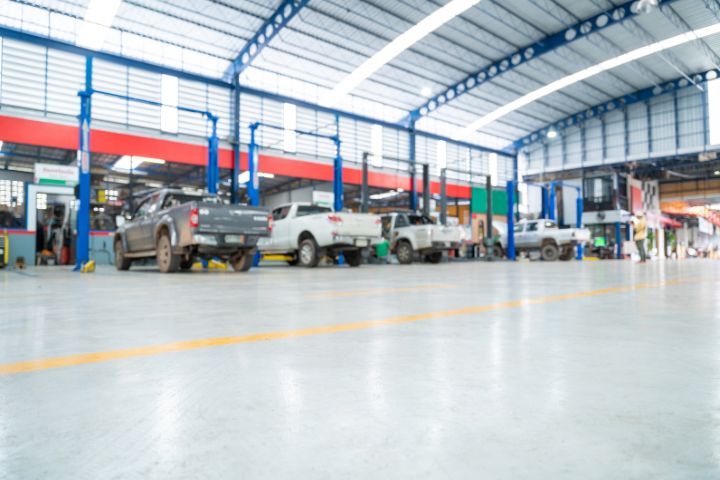
Auto repair shops are nonstop environments where oil spills, dropped tools, and hot tires are part of the daily grind. Traditional concrete quickly stains, chips, and becomes unsafe under these conditions. Epoxy flooring, on the other hand, is oil-resistant, impact-resistant, and provides a safe, anti-slip surface for technicians.
With epoxy flooring for automotive shops, businesses can cut down on time wasted cleaning up spills or repairing flooring damage. A durable, easy-to-maintain surface means mechanics can spend more time servicing vehicles and less time worrying about workplace hazards.
Manufacturing Facilities: Handling Heavy Loads with Ease
Manufacturing plants demand flooring that can handle heavy machinery, forklifts, chemical exposure, and nonstop activity. Weak floors can cause accidents, slow down workflows, or even damage equipment. Epoxy floors provide the strength and durability needed for these environments, while also offering custom options like line striping to organize production areas and guide foot traffic.
Manufacturing facility epoxy floors support productivity by reducing downtime from floor damage, enhancing safety, and keeping facilities organized. When the foundation of the space is reliable, everything else runs more efficiently.
Food Processing Plants: Supporting Hygiene and Compliance
Food production demands strict cleanliness and compliance with health regulations. Floors must resist moisture, bacteria, and constant cleaning with harsh chemicals. Epoxy flooring is seamless, non-porous, and easy to sanitize, making it the perfect solution for food plants where hygiene can’t be compromised.
By installing epoxy floors for food processing plants, facilities not only meet health standards but also cut down on cleaning time. This means less downtime and more focus on production, directly boosting output and profitability.
The Hidden Impact of Flooring on Productivity
While machinery, staff, and systems often take center stage in productivity discussions, flooring quietly plays a foundational role. Every spill that doesn’t need emergency attention, every slip that is prevented, and every surface that holds up under heavy loads saves time and resources. Over the long term, epoxy flooring pays for itself by minimizing disruptions and supporting a steady workflow.

Why Businesses Trust Epoxy Flooring
Across industries, epoxy flooring delivers a consistent set of benefits:
- Durability: Handles heavy loads, impacts, and constant movement.
- Hygiene: Seamless, non-porous surfaces resist bacteria and chemicals.
- Safety: Slip-resistant and customizable with line markings.
- Low Maintenance: Quick cleaning saves time and effort.
- Compliance: Meets strict standards in regulated industries like pharma and food.
When you combine all of these factors, the result is clear: epoxy floors don’t just support productivity – they help drive it.
Flooring is not just a surface. In industries where safety, efficiency, and compliance directly impact performance, epoxy flooring is an investment that pays off every single day. Whether in airplane hangars, pharmaceutical labs, automotive shops, manufacturing facilities, or food processing plants, epoxy provides the durability and functionality businesses need to keep moving forward.
By building a strong foundation, epoxy flooring helps companies focus on what truly matters: delivering quality work, meeting deadlines and staying ahead of the competition.