
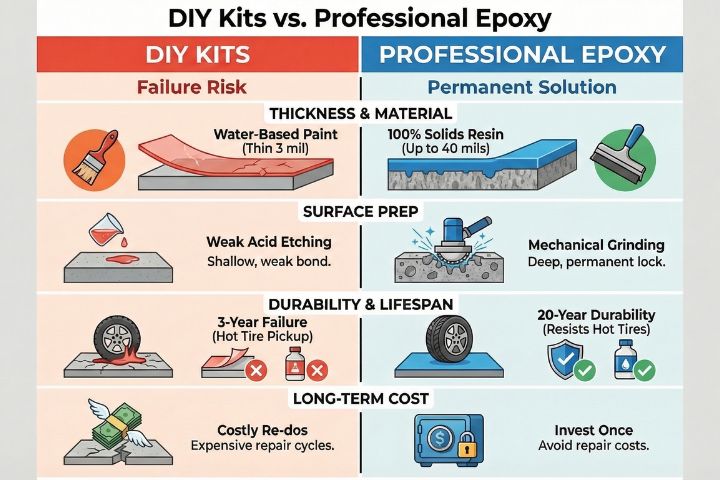
When comparing DIY Epoxy Kits vs Professional Installation, the major differences lie in chemical makeup and concrete preparation. Store-bought kits are usually 50 percent water-based paints that dry incredibly thin and easily peel under hot tires. Professional installations utilize 100 percent solids resins and mechanical diamond grinding for a permanent, impermeable bond. You are ultimately paying for heavy-duty durability, commercial-grade equipment, and guaranteed longevity.
Why Do Store-Bought Floor Coatings Fail Under Cars?
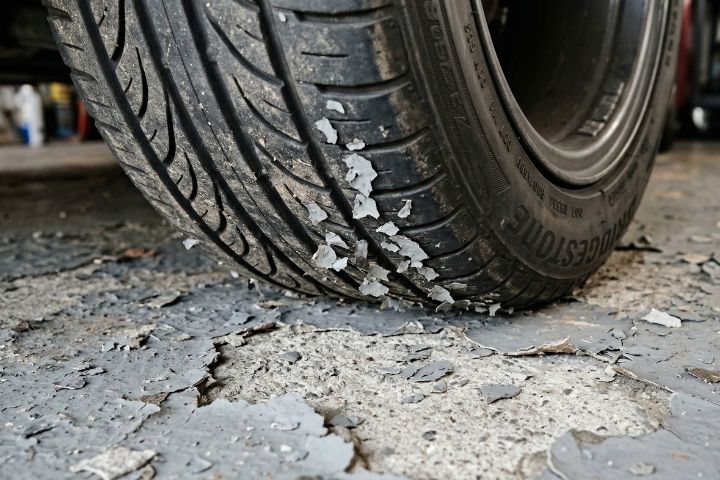
Many homeowners are shocked when their weekend project starts peeling within six months. The main culprit behind this rapid failure is a phenomenon known as hot tire pickup.
Here is exactly how hot tire pickup destroys weak coatings:
- Heat Expansion: Driving heats up your car tires, causing the rubber to expand.
- Cooling and Contracting: You park your car on the newly painted floor. As the tires cool overnight, the rubber contracts and tightly grips the floor surface.
- The Pulling Force: When you reverse your car the next morning, the bond between the tire and the cheap paint is stronger than the paint’s bond to the floor.
- The Result: The tire literally rips the paint right off the concrete in large flakes.
What Is The True Chemical Difference In Materials?
The liquids you buy at a big box store are vastly different from what industrial contractors use. True epoxy is a thermosetting polymer that requires a precise chemical reaction to cure and harden.
Most consumer kits are simply fortified acrylic or latex paint. We always urge clients to check the “solids content” of any product before buying.
Material Comparison Breakdown
| Feature | Store-Bought Floor Coating | Commercial-Grade Epoxy Application |
|---|---|---|
| Chemistry | Water-based or solvent-based paint | 100% solids thermosetting polymer |
| Drying Method | Evaporates and shrinks | Chemically cures with zero shrinkage |
| Applied Thickness | 1.5 to 3 Mils (Very thin) | 10 to 40+ Mils (Extremely thick) |
| Durability | Scratches easily, vulnerable to chemicals | Impact resistant, chemical and oil proof |
| Expected Lifespan | 1 to 3 Years | 15 to 20+ Years |
When upgrading your residential concrete coating for a busy home garage, you need materials that can withstand dropped tools and leaking automotive fluids. A thin layer of paint simply cannot offer that level of protection.
How Do Professionals Prepare The Concrete Slab?
Surface preparation is the single most critical step for a permanent floor. You can buy the most expensive resin on the market, but it will fail completely if the concrete is not properly opened up.
DIY instructions usually tell you to wash the floor with a mild acid etch. This chemical wash is highly unpredictable and rarely removes embedded oil stains or dense machine-troweled finishes.
Here is how our team at Polished Floors mechanically prepares your concrete:
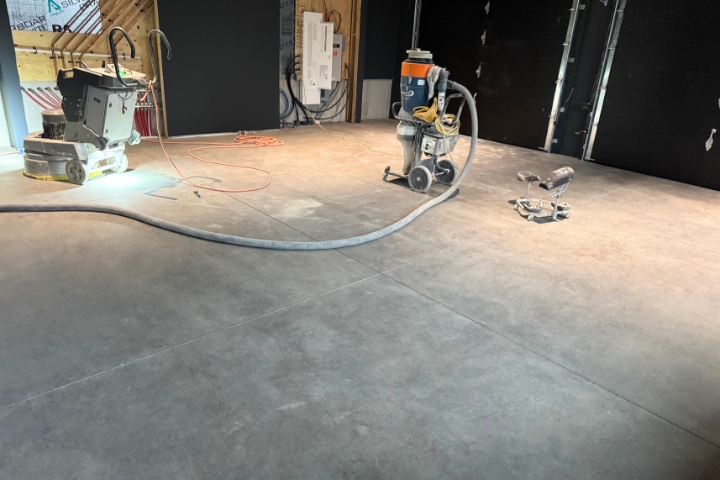
- Diamond Grinding: We use heavy walk-behind planetary grinders equipped with coarse diamond blades.
- Removing the Cap: This heavy machinery physically shaves off the top, sealed layer of the concrete.
- Achieving the CSP: We aim to create a Concrete Surface Profile (CSP) of 2 or 3. This leaves the floor feeling like medium-grit sandpaper.
- Vacuum Integration: We connect our grinders directly to industrial HEPA vacuums to capture harmful silica dust immediately.
The rough CSP allows our liquid resin to seep deep into the open pores of the concrete. Once it cures, the coating is permanently locked into the actual structure of the slab.
Are You Actually Saving Money Doing It Yourself?
The initial price tag of a consumer kit looks incredibly appealing. You might spend a few hundred dollars on materials and dedicate your weekend to painting. However, you must factor in the cost of a failed installation.
Consider the true costs of doing it twice:
- Renting Equipment: You will have to rent heavy grinders to remove the peeling paint.
- Buying Tooling: Diamond scraping blades are expensive and wear out quickly on gummy paint.
- Wasted Materials: The money spent on the initial kit is completely lost.
- Time Lost: You will lose multiple weekends fixing the mistake before you can apply a new system.
The Long-Term Cost Comparison
| Expense Category | DIY Approach (Re-done every 3 years) | Professional Installation (One-time) |
|---|---|---|
| Initial Cost | Low | Moderate to High |
| Equipment Rentals | None initially, high for repairs | Included in service |
| Labor Cost | Your personal time and physical effort | Done completely for you |
| 10-Year Value | Very poor (Multiple replacements needed) | Excellent (Zero maintenance required) |
For property owners exploring heavy-duty professional garage floor finishing or warehouse flooring solutions, hiring an expert is the most economical choice. You avoid the headache of a failing floor and gain a permanent, beautiful surface.
Ready To Protect Your Concrete The Right Way?
Your floors endure a tremendous amount of daily abuse. Protecting them requires specialized machinery and industrial-strength chemistry. If you are tired of dealing with peeling paint and concrete dust, reach out to our team at Polished Floors today to get a quote for a truly permanent solution.